








Word problems in December, when nobody wants to do word problems
Mrs Edgar · From the Classroom
Word problems are the first thing to disappear from a December maths block. They take longer, they need more explaining, and by week eight you're picking the activity that will hold a room — not the one that's hardest to run.
Which is a shame, because word problems are also the only part of maths that looks anything like maths outside a classroom. And a Christmas word problem holds attention in a way that “Question 14, page 63” has never once managed.
The diagnosis
Why students stall on word problems
When a child who can do 48 ÷ 6 can't do the same sum inside a sentence, the maths isn't the problem.
Four different things get called “bad at word problems”, and they need four different responses. Working out which one you're looking at is most of the job.
They can't read it
A decoding problem wearing a maths costume. If the child can answer the question when you read it aloud, the maths is fine and the reading is the barrier — so read it aloud, and note it for your literacy planning rather than your maths planning.
They can't picture it
They've decoded every word and still have no mental image of what's happening. This is the most common one, and the fix is always the same: draw it. Not a diagram — a drawing. Twelve candy canes, three plates.
They can't choose the operation
the keyword trapThis is the one we accidentally teach. Tell a class that “altogether means add” and you've given them a rule that works for a term and then quietly breaks — because “there are 24 altogether, shared between 4” is a division problem containing the word altogether. Keywords are a shortcut around understanding, and multi-step problems are where the bill comes due.
They can't do the calculation
The only one that's actually a maths problem — and, in a Year 3 room, usually the rarest of the four. If the sticking point is recall rather than reasoning, the Christmas tree times-tables craftivity works the same fortnight from the other end.
The habit
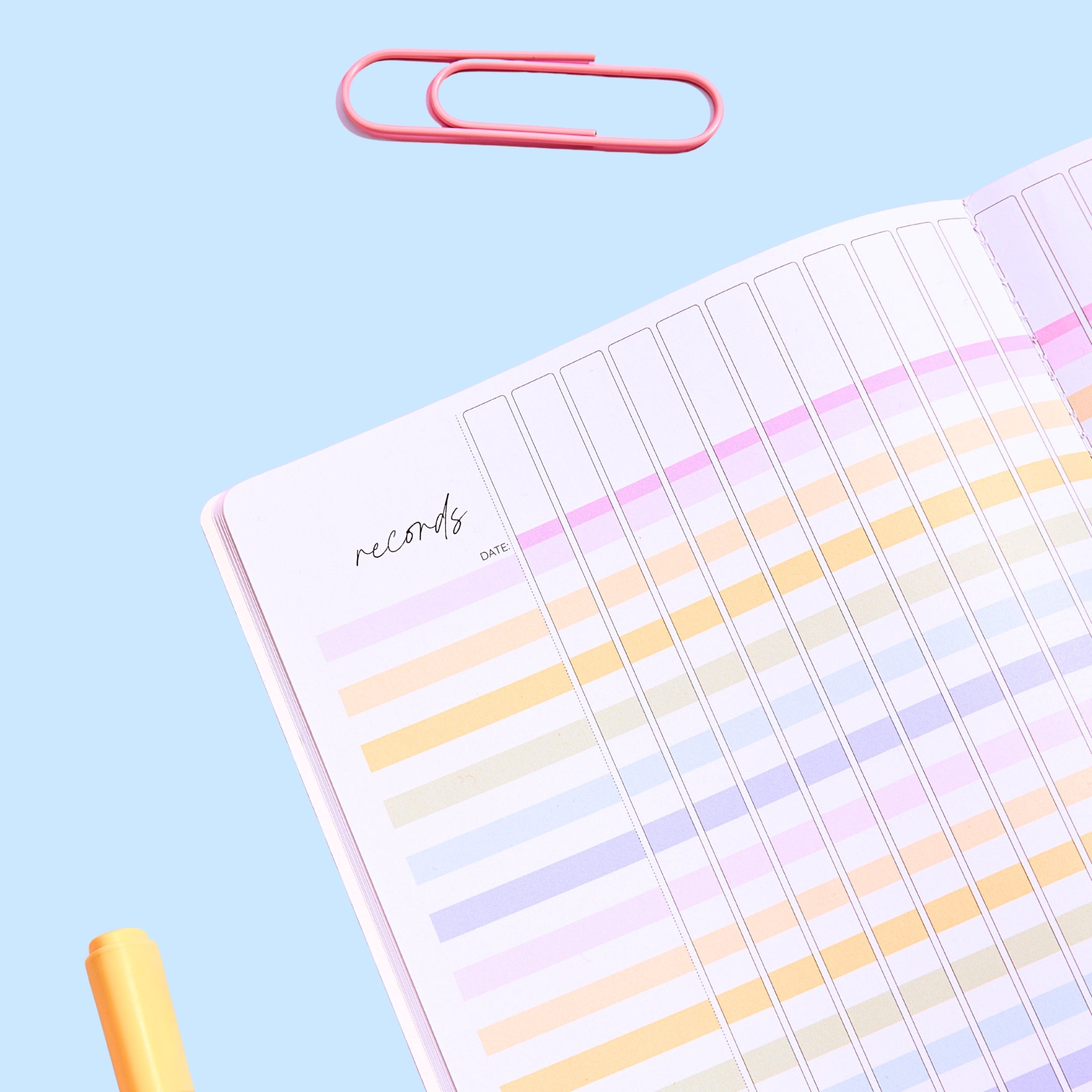
Teaching the working-out panel
A blank box next to a word problem gets treated as decoration until you teach into it. Once you do, it becomes the most useful assessment surface on the page — because a wrong answer with visible working tells you exactly which of the four problems above you're dealing with, and a wrong answer on its own tells you nothing.
Model badly on purpose
Do one on the board with no working, get it wrong, and be visibly stuck about why. Then do it again with a drawing. Children who have watched a teacher get stuck are dramatically more willing to show messy thinking.
Give the box a job
three things“Show your working” is too vague to follow. “In this box I want a picture, the numbers you're using, and what you did to them” is a checklist a Year 3 can actually meet.
The number sentence line is separate for a reason
The working panel is where thinking is allowed to be messy. The number sentence line is where it gets formalised — 24 ÷ 4 = 6. Keeping them apart teaches that both matter, and that one comes after the other.
Mark the working, not just the answer
If you only ever tick the answer, students learn that the box was optional and you were bluffing. Circle the good drawing. Comment on the number sentence. It takes ten extra seconds a card.

The practical bit
Twelve ways to run 25 problems
The cards are the same. How you hand them out is what decides whether it feels like a worksheet.
Problem of the day
the obvious one, and the best oneOne card, on the board, every morning. Ten minutes. Twenty-five problems is almost exactly a December's worth of school days — so it doubles as a countdown, and the routine means you never have to introduce it twice. If you want the countdown to be the point, the classroom advent calendar puts one of these behind each door.
A maths rotation station
Five cards in a tray, one group at a time. Two identical cards print per page, so a pair can work the same problem side by side and compare working — which is where the actual conversation happens.
Solve and swap
Everyone gets a different card. Solve it, then swap with a neighbour and check their working — not their answer. “I can't follow step two” is a more useful sentence than “you got it wrong.”
Around the room
Blu-tack the cards to the walls. Clipboards, and students move at their own pace. It buys you twenty minutes of purposeful movement in a week where sitting still has stopped working.
One card, four methods
The whole class on the same problem, then four students show four different ways they got there. The point isn't the answer — it's that there were four ways.
Write the question backwards
extensionGive them the number sentence and the answer, and ask them to write the Christmas story that fits. Far harder than solving, and it exposes misconceptions instantly.
The relief folder
Cards, answer key, done. A relief teacher can run a maths lesson from it with no context and no prep, which is worth doing before you need it rather than at 6am on a sick day.
Five more ways, briefly
- Fast finishers — a tray on the bench, take one when you're done
- Partner check — solve independently, compare, resolve disagreements before asking you
- Home practice — one card in the bag, with the key for the adult
- Small group with you — the students who need the reading done aloud
- Assessment — three cards, no help, and you have real evidence for the report
The class problem
Differentiating one problem four ways
You don't need four versions of a card. You need four ways into the same one.
Read it aloud
For the students whose barrier is decoding. Removes the reading, keeps the maths entirely intact.
Give them the materials
Counters, blocks, anything. A child who can't picture twelve candy canes shared between three plates can absolutely do it with twelve counters and three bits of paper.
Give the number sentence, ask for the answer
Skips the hardest step for a student who is stuck on choosing the operation, and still gets them the calculation practice.
Ask for a second question
extension“What else could you work out from this information?” No new sheet, no ceiling, and the answers are always more interesting than anything you'd have set.
For the planning doc
Where it sits in the curriculum
Festive doesn't have to mean off-syllabus. A well-built set of Year 3 Christmas word problems covers addition and subtraction, multiplication and division, money, duration and multi-step reasoning — which in Australian Curriculum v9 means AC9M3N03, AC9M3N04, AC9M3N06, AC9M3A03 and AC9M3M03.
Worth writing those codes into your December plan rather than calling the fortnight “consolidation”. It's the same teaching either way, but one version survives a planning conversation.
Twenty-five problems, ten minutes a morning, and a December maths block that still teaches something.
Read it twice, then draw it.


Leave a comment