







I Can Statements for Every Year Level, Plus a Free Goal Mat Builder
Mrs Edgar · From the Classroom
The curriculum is written for teachers. Learning goals are for the kids. An “I can” statement is the bridge between the two: one skill, in words a seven-year-old can read, say out loud and tick off when they’ve got it.
Writing them is the slow part, so we’ve done it for you. There is now a child-friendly I can statement for every English and Maths content description in the Australian Curriculum Version 9.0, Foundation to Year 6 (all 328 of them), and a free builder that drops the ones you choose straight onto a goal mat you can print.
The basics
What makes a good I can statement
If a child can’t tell you whether they’ve done it, it isn’t finished yet.
It is one skill
“I can add, subtract and tell the time” is three goals. Split it, so each one can be ticked off on its own.
It is something they can show you
“Understand” and “know about” are hard to tick. Tell, show, write, read, find and explain are easy. If you can picture what the child would do to prove it, you’re there.
It is in classroom words
Use the words you already use with your class. “Subitise” becomes “see how many without counting”. “Modal verbs” becomes “words like might, should and must”.
It keeps its code
Put the content description code underneath in small print. The child never needs it, but you will, at report time.
The method
How to write one from the curriculum
Start with the content description. Finish with something that fits in a box.
- Find the content description for the skill you are teaching this term.
- Circle the verb a child could show you. Recognise, read, name, write, compare.
- Swap the curriculum words for class words.
- Cut it to one idea, short enough to fit on a goal mat.
Here is what that looks like with three real ones.
AC9M2M04 recognise and read the time represented on an analog clock to the hour, half-hour and quarter-hour
I can tell the time to the hour, half-hour and quarter-hour.
AC9MFN02 recognise and name the number of objects within a collection up to 5 using subitising
I can see how many things there are, up to 5, without counting.
AC9E3LA02 understand how the language of evaluation and emotion, such as modal verbs, can be varied to be more or less forceful
I can use words like might, should and must to make my opinions softer or stronger.
Some content descriptions cover a lot of ground. Year 5 writing, for example, rolls planning, editing, publishing, connectives and dialogue punctuation into one. For those, keep the I can broad and add a narrower goal of your own for the part you are focusing on this term.
Foundation to Year 6
I can statements for every year level
One English and one Maths from each year. The builder has the full set.
Foundation
English I can hear rhymes, syllables and the sounds in words. AC9EFLY09
Maths I can see how many things there are, up to 5, without counting. AC9MFN02
Year 1
English I can read with phrasing and fluency and check it makes sense. AC9E1LY04
Maths I can add and subtract numbers within 20 using strategies. AC9M1N04
Year 2
English I can join two ideas into a compound sentence using and, but or so. AC9E2LA06
Maths I can tell the time to the hour, half-hour and quarter-hour. AC9M2M04
Year 3
English I can use words like might, should and must to make my opinions softer or stronger. AC9E3LA02
Maths I know my 3, 4, 5 and 10 times tables and the matching division facts. AC9M3A03
Year 4
English I can punctuate dialogue with quotation marks, commas and capitals. AC9E4LA12
Maths I can find equivalent fractions and connect fractions to decimals. AC9M4N03
Year 5
English I can plan, write, edit and publish texts with connectives, expanded noun groups and dialogue. AC9E5LY06
Maths I can use percentages and connect them to fractions and decimals. AC9M5N04
Year 6
English I can spot vivid language like metaphors, similes, idioms and hyperbole. AC9E6LA08
Maths I can find a fraction, decimal or percentage of an amount, including discounts. AC9M6N07
Free tool
The Goal Mat Builder
Every statement above, and all the others, ready to tap.

Choose a year level, pick English or Maths, and tap the goals you want. They drop onto the mat in order, left to right, top to bottom. Tap a goal on the mat to take it off again.
Mix year levels
Working below or above? Switch years part way through. Goals from different years sit happily on the same mat.
Filter by strand
Language, Literature and Literacy for English. Number, Algebra, Measurement, Space, Statistics and Probability for Maths.
Check the wording
Every goal has a “Curriculum wording” drop-down with ACARA’s own text, so you can see exactly what it covers before you choose it.
Add your own
There is a box for goals that aren’t on the list, like a reading level or a personal target.
Print it your way
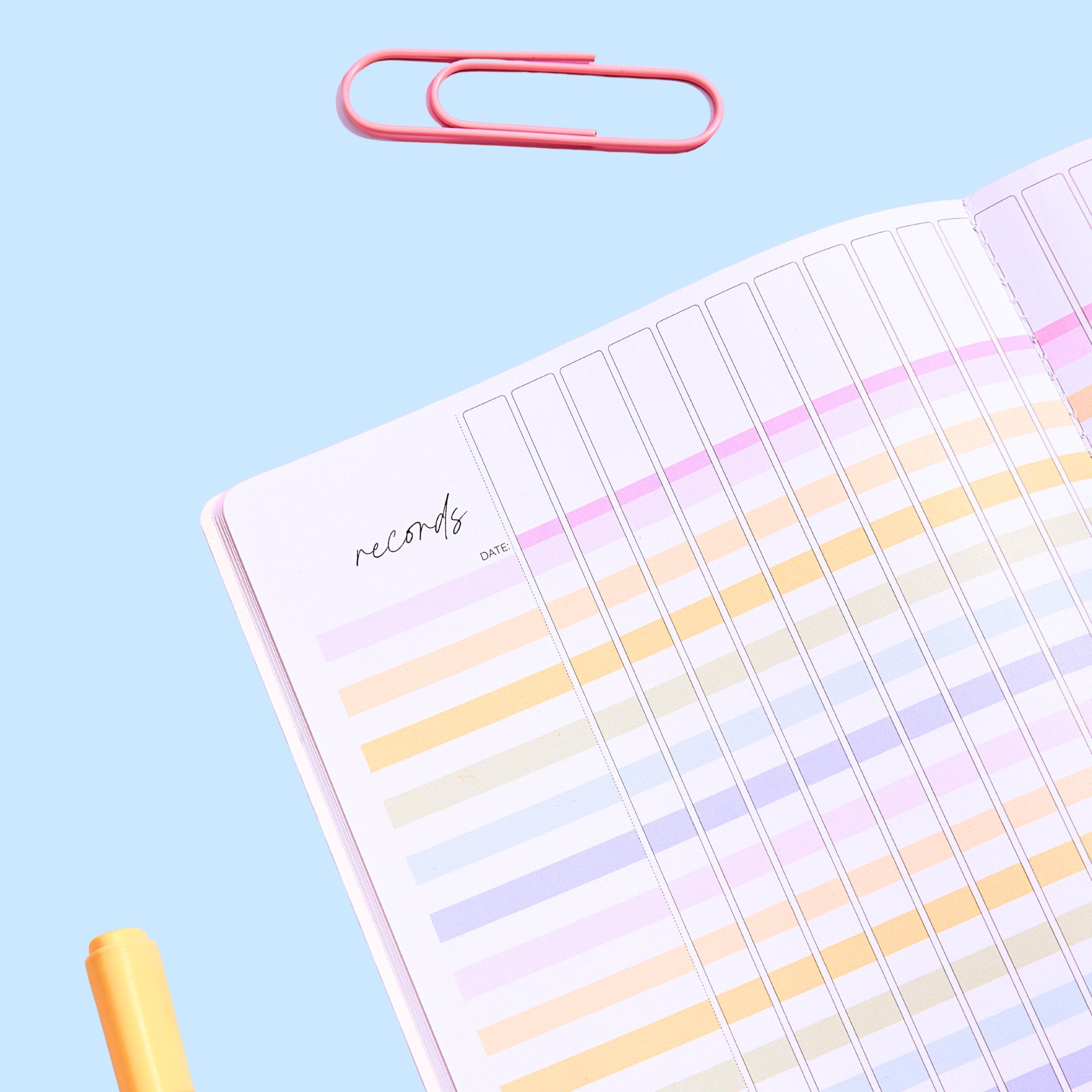
Add a name and term, choose colour or black and white, and show or hide the codes. It prints on one A4 landscape page, or you can save it as a PDF. It also saves your mat on that device as you go, so you can come back to it.

A Year 2 mat, five goals a side, ready for term one.
The mat is our My Learning Goals printable, with a blank-subject mat, a fold-up goal book cover and an editable version you can type into. Get it on its own or in our Back to School Bundle.
All term
Using them all term
Fewer goals, more ticks.
Start with three a side
The mat has room for twelve English and twelve Maths goals, but three of each is plenty to begin with. Add the next one when a goal is ticked off.
Let them choose
Offer two or three goals and let the child pick. Children work harder on a goal they chose themselves.
Make the tick mean something
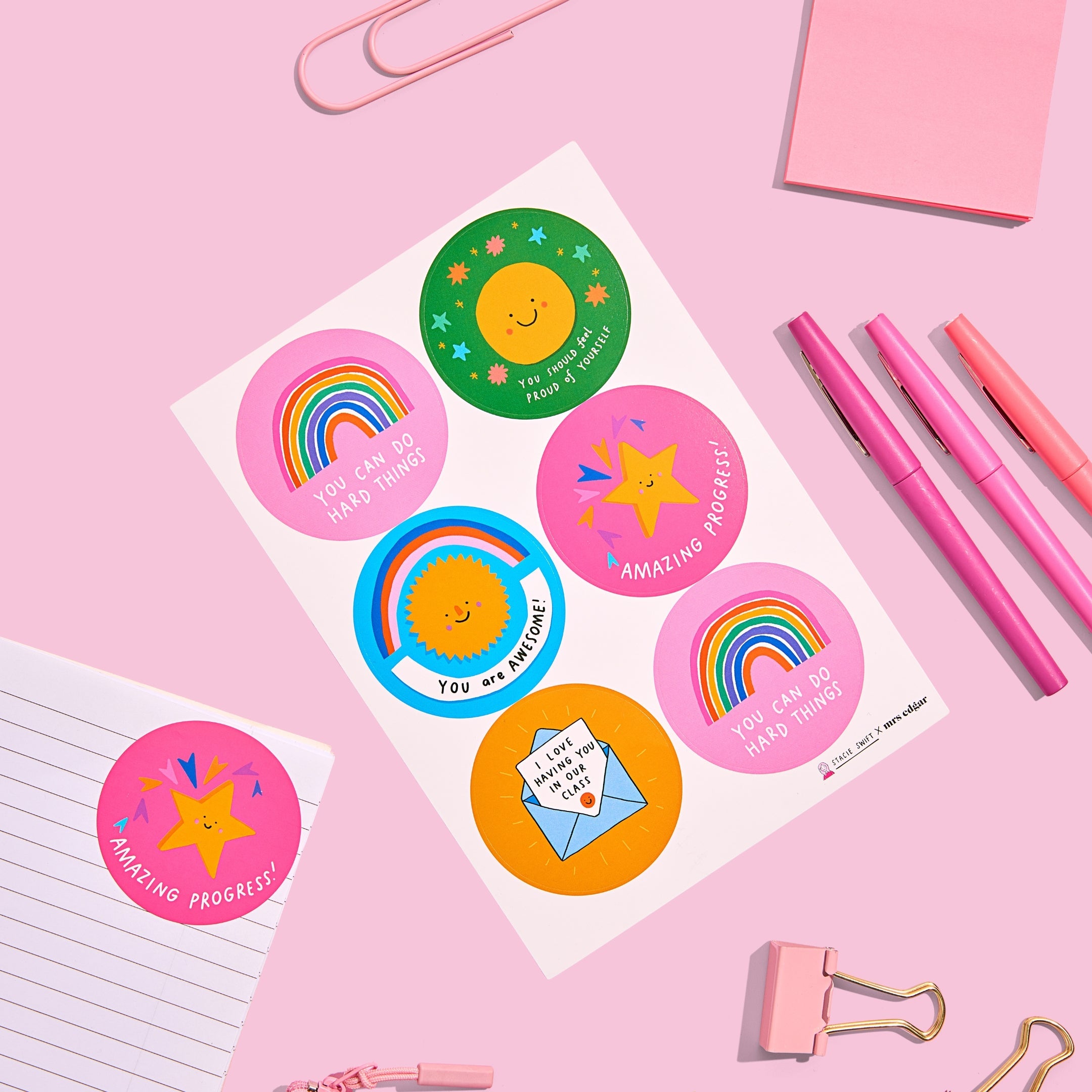
A sticker or a stamp when they show you. For the bigger goals, ask for three ticks on three different days before it counts.
Bring it to interviews
Print a second copy for home and put the mat on the table at parent–teacher interviews. It shows families what their child is working on, in their child’s words.
For the whole system, from goal books to an assessment basket, read How to Set Up Learning Goals in Your Classroom. If writing is your focus this term, 10 Ways Writing Goals Can Transform Your Classroom goes deeper.
Pick a year, tap a few goals, print. That’s goal setting sorted for the term.
More From The Blog
- How to Set Up Learning Goals in Your Classroom
- 10 Ways Writing Goals Can Transform Your Classroom
- Engaging First Day Classroom Activities and Back to School Displays
- Number of the Day: The 10-Minute Daily Maths Routine
Curriculum wording and codes are from the Australian Curriculum Version 9.0 © ACARA, licensed under CC BY 4.0. The I can statements are Mrs Edgar’s own. ACARA does not endorse this resource.


Leave a comment